Our Story

We supplied organic fertilizers such as dried sardines, rapeseed oilcake, and night soil, enriching the soil of the fields and sustaining the stable cultivation that nourished the community.
By serving as a vital link between cities and rural villages, this humble trade not only enriched daily life but also laid the foundation for a business that would come to support the economy and society at their very core.
-
 “Beginning of Petroleum Products”With the spread of clean-burning kerosene and lubricating oils, we began handling petroleum products.
The quality of light improved dramatically, enriching life after dark, and we became affectionately known as “Abura Honjo”—Honjo, the oil merchant.
As we delivered light and warmth to the region, a new sense of purpose began to take root within us. -
 “Embracing Modern Commerce”At the dawn of the 20th century, as petroleum distribution expanded, we enlarged our main store.
With its grand wooden-roofed warehouse and striking façade, our merchant house became a symbol of regional commerce.
We cultivated a business rooted in trust—through careful inventory management, extending credit, and fostering relationships that went far beyond mere transactions, evolving from simple trade into bonds of confidence. -
 “Building a Logistics Network”As demand for fertilizers and petroleum grew, we established our own delivery system, moving beyond handcarts and manpower.
This ensured both a stable supply and the preservation of quality, expanding our business into the realm of distribution itself.
By anticipating the shifting currents of the times, we began to chart a path toward the future—a bold challenge that would define the next chapter of our story. -
 “Entering Motorized Transportation”At a time when most roads were still unpaved, we introduced Ford and Chevrolet vehicles and fully embraced motorized freight transport.
We organized an in-house transportation division and built a new logistics network that connected the region’s producers with urban markets.
The power of transportation began to drive the region’s industries forward, transforming both commerce and community.
Chevrolet -
 “Expansion into Petroleum and Automotive Businesses”In 1930, we installed a gasoline pump at our main store and began offering refueling services.
We opened branch locations and expanded into the sale of automotive parts and lubricants.
By establishing an integrated supply system for both energy and parts, we evolved into a cornerstone of transportation and the regional economy, supporting the very foundation of movement and commerce.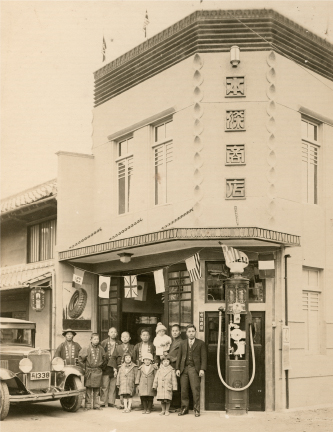
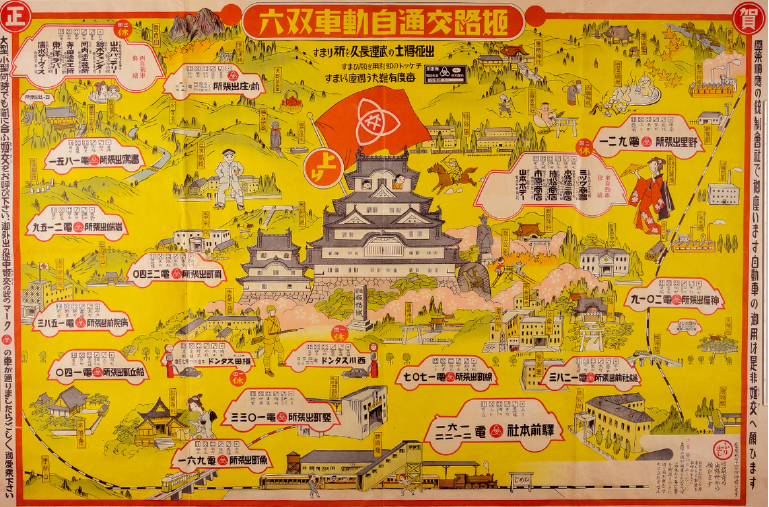
Petrol pumps installed at head office.Sugoroku of EnterpriseA presence etched in memory—
depicted in a 1930s sugoroku (a traditional Japanese board game)
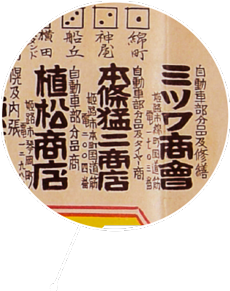
as “Honjo Takeji Shoten.”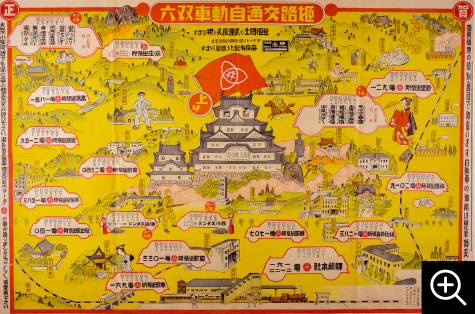
 Himeji Kōtsū Jidōsha Sugoroku
(Himeji Transportation Automobile Sugoroku, housed in the Hyōgo Prefectural Museum of History)Himeji Kōtsū Jidōsha Sugoroku
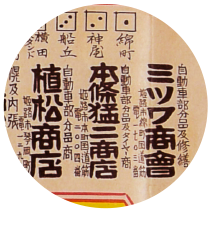
(Himeji Transportation Automobile Sugoroku, housed in the Hyōgo Prefectural Museum of History)In the 1930s, as state-led industrial controls and urban planning advanced, a sugoroku (a traditional Japanese board game) was created with the aim of public education.
At that time, Honjo Takeji Shoten supported the foundations of modernization by ensuring a stable supply of fuel, oils, and essential daily goods.
It depicted key points of the region’s transportation, industry, and medical infrastructure, inscribed with the names of major companies supporting the community.
This was more than mere advertising; it stood as proof of the trust placed in these enterprises to connect regional society with national policy.
Its appearance in this cultural medium signified that the company itself was envisioned as part of the region’s future.
This original illustration remains both a symbol of the path we have walked and a quiet testament that our founding principle—“to support the foundations of daily life and society”—had already taken shape even then. -
 “Consolidation During Wartime and Postwar Rebirth”
In 1943, as part of wartime controls, we consolidated five regional transport companies—including Yamazaki Cargo Motor and Mikata Motor, both under the Honjo umbrella—into Shisō Motor Freight Co., Ltd.
After the war, amid ruins and confusion, we rebuilt a supply system from the ground up to support daily life in the community.
We took on the vital task of transporting military and civilian supplies, navigating the harsh realities of fuel rationing and vehicle requisition.
In 1947, Honjo & Co., Ltd. was reborn, carrying forward its mission in a new era.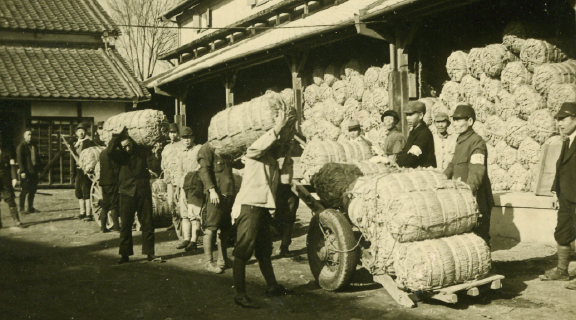
Food rationing under wartime control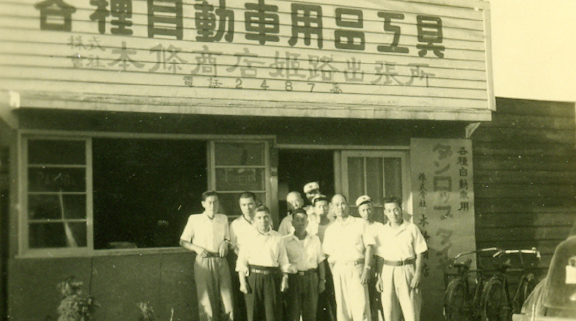
Establishment of sub-branches immediately after the war. -
 “Postwar Reconstruction and Business Modernization”Amid the severe shortages of vehicles and basic materials, we resumed operations, dedicating ourselves to rebuilding the business and contributing to postwar recovery.
In 1956, we opened a second service station under the Mitsubishi brand, followed by a third in 1958, strengthening our ability to ensure a stable supply within the region.
In sales promotion, we launched a traveling campaign for Dunlop products using company vehicles and established the exclusive sales company Dunlop Sales Company.
Through a diverse portfolio—including fuel, tires, and automotive parts—we supported both daily life and industry on a broad scale.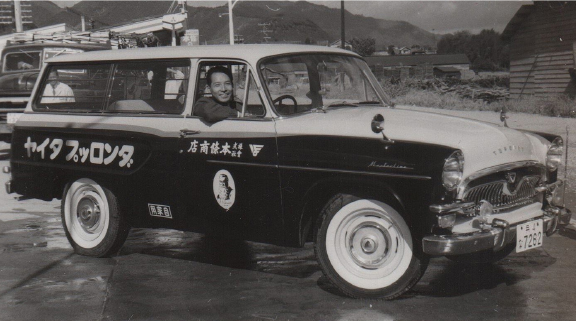
Dunlop Tire Campaign Aid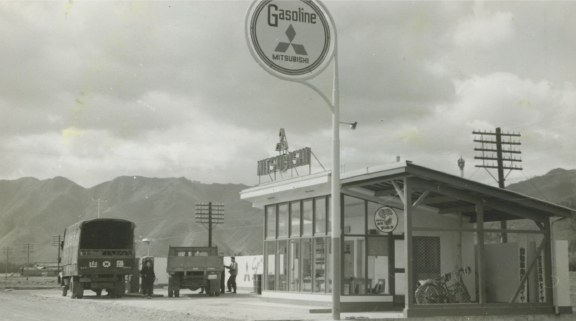
Opened a Mitsubishi-branded gas station -
 “Pioneering New Markets and Strengthening Our Foundation”
In 1960, we began supplying LP gas, a next-generation fuel that was quickly embraced as a vital part of everyday infrastructure—on par with electricity and water—transforming the way people cooked and heated their homes.
At the same time, we partnered with the CACTUS brand to open a state-of-the-art service station.
We established a robust system for cylinder delivery and safety management, ensuring a stable and secure energy supply.
By creating an innovative business model that combined petroleum products with LP gas, we contributed to both the diversification of energy sources and the improvement of quality of life.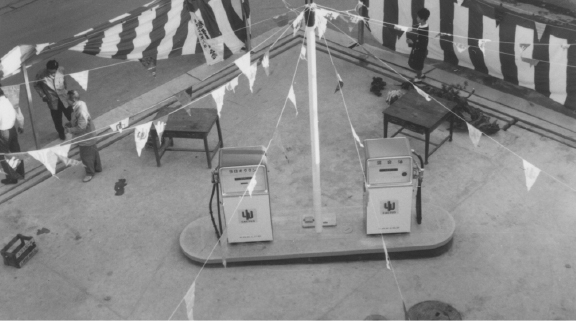
CACTUS service stationsIn 1967, in response to the expansion and diversification of our business, we restructured Honjo & Co., Ltd. into a more specialized organization with four distinct divisions:
Anticipating the modernization of lifestyles that accompanied Japan’s period of rapid economic growth, we clarified our growth strategy by entering new fields such as residential environments, home centers, and auto services—laying the groundwork for further development.
(1) petroleum sales, (2) LP gas and residential equipment, (3) automotive products and household goods, and (4) fertilizer sales.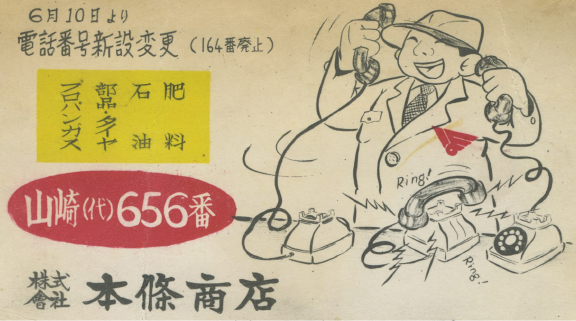
A Historical Flyer -
The Challenge of Takeji Honjo
 “Postwar Transport Reorganization and Urban Hub Development”
In 1947, under the leadership of then-president Takeji Honjo, Shisō Motor Freight was spun off from Honjo & Co., Ltd., marking a decisive step into the transportation business to meet the surging postwar demand for logistics.
In 1956, a new headquarters building was constructed in Osaka.
In 1950, the company was renamed Sanyō Motor Transport and began operating regular route services between Osaka and Okayama, laying the foundation for intercity transportation as its service area expanded.
Its advanced design, featuring glass blocks, drew attention as “Osaka’s first block-constructed building.” Serving as an integrated hub combining dispatch, maintenance, and warehouse functions, it became a milestone that paved the way for nationwide expansion.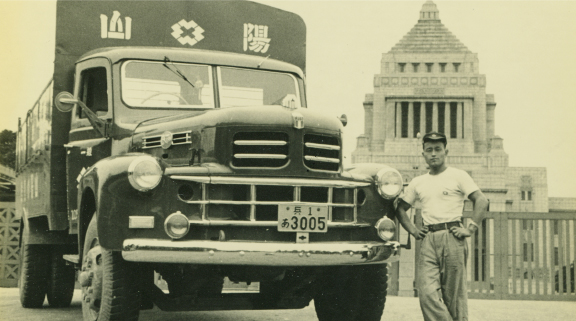
Launch of the Tokyo Route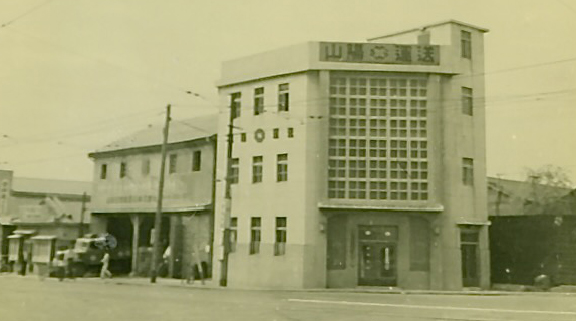
Osaka’s First Block-Constructed Headquarters Building “National Expansion and Logistics Innovation through Private Railway Collaboration”
In the 1960s, Sanyō Motor Transport obtained route licenses for the Osaka–Tokyo corridor and launched a full-scale national transport network. The number of hubs surpassed 20, and the company grew to become one of Japan’s top five transport firms. In 1961, a company representative traveled to the United States as part of a Japan Trucking Association delegation and attended the American Trucking Associations’ annual conference, deepening international logistics expertise.
The company also established Takuyo Shipping, embarking on the creation of an integrated land–sea transportation network.
In 1962, it formed a capital alliance with Hanshin Electric Railway, pursuing greater efficiency in intercity transport through collaboration with private railways.
This fusion of rail and truck transportation established a groundbreaking new logistics model and brought innovation to the industry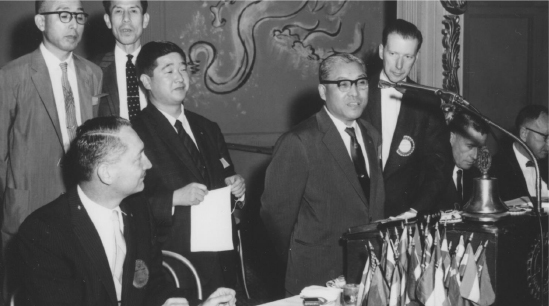
Takeji Honjo addressing the ATA Annual Conference as Japan’s delegate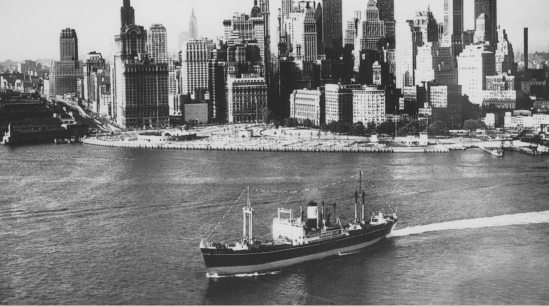
The Anyō Maru sailing through Manhattan, New York -
 “The Evolution of Our Automotive Lifestyle Business”
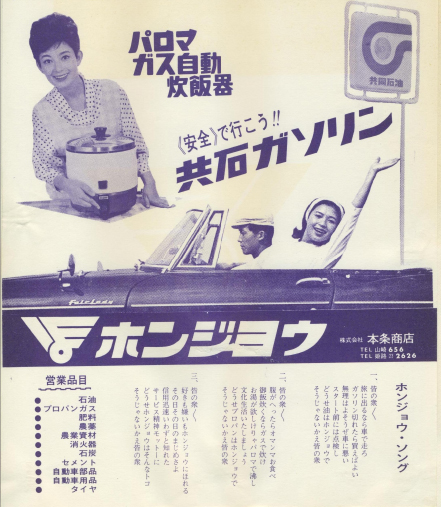
As motorization accelerated, we opened the Honjo Auto Center, a pioneering specialty store for automotive accessories.
We also partnered with Kyodo Sekiyu (then Kyodo Oil Company, now ENEOS) to expand our branch network.
Equipped with the latest innovations of the time—car stereos, fender mirrors, air conditioners—it captured attention by offering a vision of a comfortable and functional automotive lifestyle.
By responding to the needs of an ever-growing automotive society, we helped to shape new forms of distribution and service.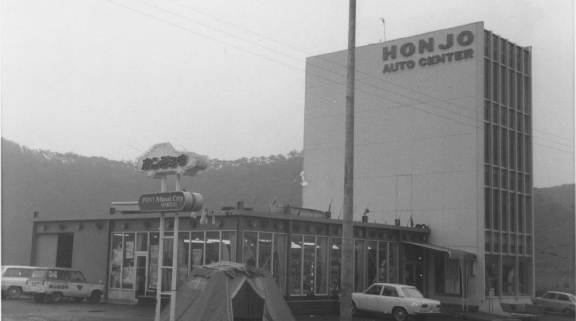
Honjo Auto Center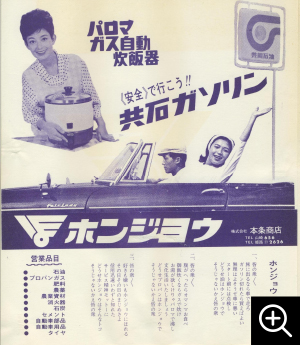 Gasoline & Propane Gas Ad
-
 “Expansion into Housing-Related Businesses”We entered the field of safety and disaster prevention by offering sales and inspection services for fire protection equipment.
In 1977, we opened Lovely Honjo, an innovative retail store that garnered attention as a forerunner of today’s home centers, offering a wide range of lifestyle products.
By focusing on heating appliances and residential equipment, we developed a system to propose new ways of living—building a business model that met the increasingly diverse needs of daily life, with energy supply and living environments as its two pillars.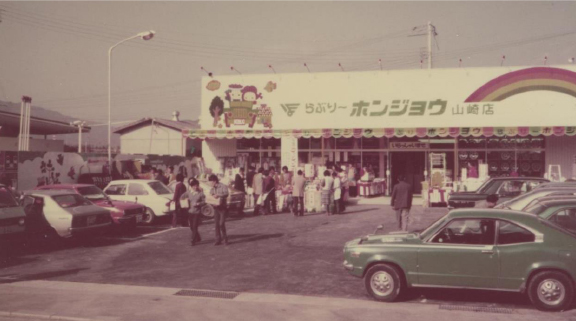
Lovely Honjo -
 “Brand Transition and the Advancement of Lifestyle Services”With the transition to the JOMO brand, we not only enhanced our automotive lifestyle business but also expanded into the broader lifestyle sector, offering products and services essential to daily life.
We transformed our service stations from mere fueling points into spaces for lifestyle inspiration, providing new value that closely aligned with the everyday lives of the local community.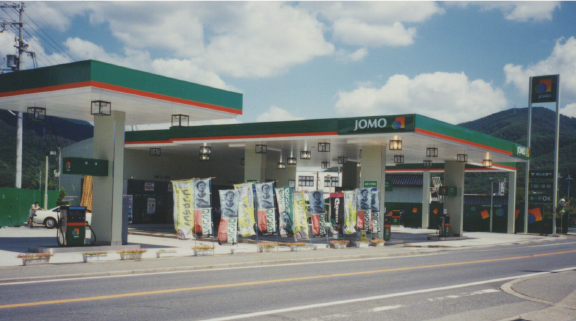
JOMO Service Stations -
 “Brand Integration and Business Expansion”With the restructuring of petroleum suppliers, we transitioned to the ENEOS brand and began developing forward-looking energy solutions in response to growing global awareness of environmental issues.
We diversified our automotive and housing-related businesses, promoting energy-saving residential innovations such as hot-water heating, home fuel cells, and the use of solar and thermal energy.
By integrating energy and living, we fully embraced a lifestyle-oriented service model that offered sustainable solutions for both home and mobility.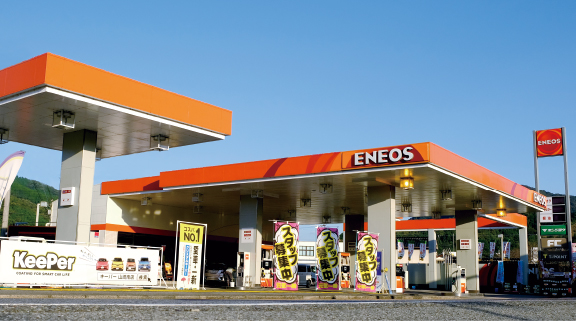
ENEOS Service Stations -
 “Evolution into a Comprehensive Energy Company and Environmental Initiatives”In 2016, with the full liberalization of the electricity retail market, we entered the power business and began supplying electricity to corporate clients by leveraging our existing fuel supply network.
As a comprehensive energy company covering petroleum, gas, electricity, and renewable energy, we offered new services to meet the region’s energy needs while strengthening our commitment to reducing environmental impact—through the introduction of renewable energy and energy-saving equipment.
We continue to advance the realization of a sustainable society by integrating diverse energy solutions with responsible environmental practices. -
 “Advancing Decarbonization and Regional Contribution”Since the COVID-19 pandemic, we have placed greater emphasis on contributing to a decarbonized society by developing renewable energy sources, optimizing the balance of electricity supply and demand, and providing energy solutions that combine efficiency, environmental products, and innovative technologies.
We promote Total Energy Management, supporting customers in optimizing their energy use while contributing to regional climate action and disaster resilience.
Through these efforts, we continue to redefine our social responsibility as an energy company.
ページトップへ戻る
